jorge morales
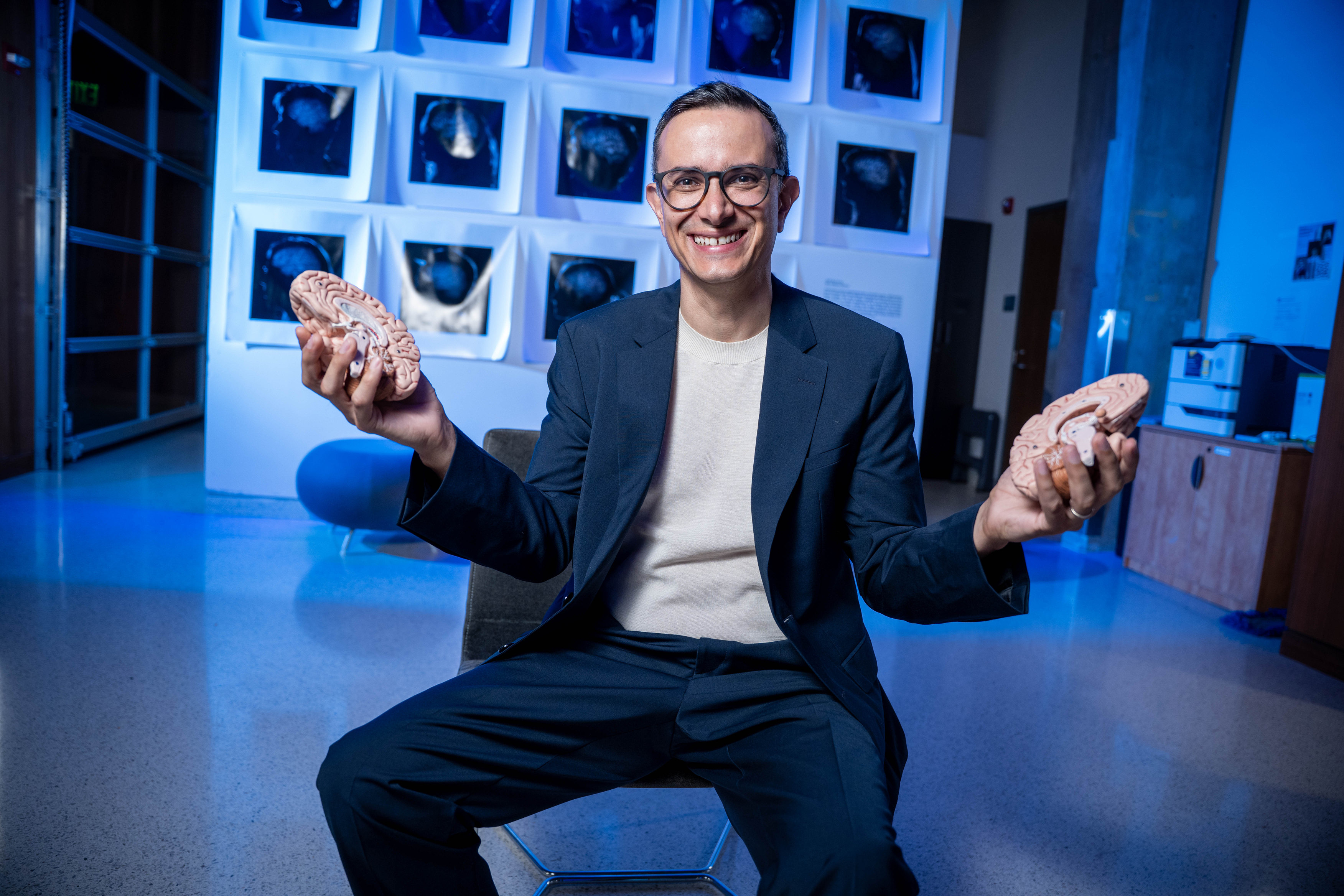
I am an Associate Professor of Philosophy & Psychology and Neuroscience at Duke University, where I direct the Subjectivity Lab — an interdisciplinary research group of postdoctoral researchers, graduate, and undergraduate students. Together with collaborators from across the globe, we aim to understand how the mind creates our visual world—what we see, what we don't see, and what we imagine. We use behavioral, neuroimaging, artificial intelligence and philosophical tools to understand how the brain supports visual conscious experiences and how we introspect them.
Before coming to Duke, I was an Assistant Professor at Northeastern University in the Psychology and Philosophy Departments, and before that I was a Postdoctoral Researcher in the Department of Psychological and Brain Sciences at Johns Hopkins. My graduate training includes a Ph.D. in Philosophy from Columbia University and a parallel track in psychophysics and cognitive neuroscience as a graduate research assistant. Way before that, I was born and raised in Mexico City, where I obtained a BA from Universidad Panamericana and a Master's from UNAM, both in Philosophy.
When not doing philosophy or science, I enjoy spending time with family and friends. I really like reading (ancient) history. I am also a serial hobbyist. Throughout the years I have gotten into photography, cocktail-making, solving the Rubik's cube, and stargazing.

research
The goal of my research program
is to
understand the subjective character of the mind and
to improve how we study it scientifically. To this
end, our lab has three complementary lines of research in which we integrate
different topics—consciousness, perception, mental imagery and metacognition—using different methodological approaches—psychology, neuroscience, and philosophy.
(1) We study what we "see". To do this, we use
vision science as a tool to make progress in questions that have
proved resistant to philosophical analysis. Our work on the philosophy of perception and vision science focuses
on the subjective features that imbue our perceptual states—let these
be themselves perceptual (e.g., 3D shape, visual perspective and attention), cognitive
(e.g., Bayesian updating), or not even really there (e.g., absences and mental imagery).
(2) We study how we know what we experience. Our goal is to understand metacognitive and introspective mechanisms as well as their psychological, epistemic, computational and neural features. For example, we focus on
calibrating introspection's reliability and how to model the
decision-making and neural processes that support metacognition. Whether it's memory, perception, or fake news, we computationally model how good people are at knowing what they know.
(3) We study
what makes our experiences conscious. Our research develops theoretical tools for a successful science of
subjectivity that can discover the neural underpinnings of subjective
confidence and conscious awareness. An international, multi-lab project currently underway aims at discovering the neural basis of the intensity of conscious experiences using advanced methods in fMRI and machine learning.
Asking fundamental questions about the subjective
character of the mind invites us, and in fact forces us, to
branch out into other areas within science (e.g., memory,
decision-making, emotions, pain, developmental and social psychology)
and within philosophy (e.g., general philosophy of science,
epistemology, and moral philosophy, broadly construed: from
the neural basis of voluntary action and ethical challenges posed by
novel neuroimaging technologies to how well people think they are at detecting misinformation). This also forces us into adopting new technologies into our toolkit: from pupillometry to machine learning and virtual reality.
preprints
- McCarty, M. & , J. (2026) Artificial Phantasia: Emergent Mental Imagery in Large Language Models. arXiv.
- Code, data and stimuli are available in GitHub.
- Plunkett, D., Morris, A., Reddy, K. & , J. (2025) Self-Interpretability: LLMs Can Describe Complex Internal Processes that Drive Their Decisions. arXiv.
- Code and data for all experiments are available in GitHub.
- Wang, A., Williams, L., Ogunlade, O., , J., & Kuchibhotla, K. (2023) Starting from Zero: Task Learning in Completely Naïve Individuals. PsyArXiv. doi:10.31234/osf.io/u5btm
articles
- Maniscalco, B., Graham Castaneda, O., Odegaard, B., , J., Rajananda, S., Denison R. N. & Peters, M. (2026) The Relative Psychometric Function: A General Analysis Framework for Relating Psychological Processes. Psychological Review.
- The open-source relative psychometric function toolbox can be found in GitHub. Data and analysis scripts can be found in OSF.
- Plunkett, D. & , J. (2025) Representational Momentum Transcends Motion. Psychological Science, 36 (12): 930-40.
- Preregistrations, experiment scripts, data, and analysis scripts are available on OSF. Demos of all our experiments are available here.
- , J. (2025) Confidence in Consciousness Science. Journal of Consciousness Studies, 32 (11-12): 206-20.
- IIT-Concerned et al. (2025) What Makes A Theory of Consciousness Unscientific. Nature Neuroscience, 28 (1): 689-93.
- Michel, M., , J., Lau, H. & Block, N. (2025) Aphantasia As Imagery Blindsight. Trends in Cognitive Sciences, 29 (1): 8-9.
- , J. (2024) Introspection Is Signal Detection. British Journal for the Philosophy of Science, 75 (1): 99-126.
- Wu, W. & , J. (2024) The Neuroscience of Consciousness. The Stanford Encyclopedia of Philosophy (Summer 2024 Edition), Edward N. Zalta & Uri Nodelman (eds.).
- , J. & Firestone, C. (2024) Empirical Evidence for Perspectival Similarity. Psychological Review, 131 (1): 311-320.
- Dobbs, M., DeGutis, J., , J., Joseph, K. & Swire-Thompson, B. (2023) Democrats are better than Republicans at discerning true and false news but do not have better metacognitive awareness. Communications Psychology, 1 (46).
- , J. (2023) Mental Strength: A Theory of Experience Intensity. Philosophical Perspectives, 37: 248-268.
- , J. & Firestone, C. (2023) Philosophy of Perception in the Psychologist's Laboratory. Current Directions in Psychological Science, 42 (4): 307–17.
- , J. (2023) Tracing the Origins of Consciousness, Philosophical Psychology, 36 (4): 767–71.
- , J. & Firestone, C. (2022) A New Perspective on Mental Rotation. Current Biology, 32: R1281–3.
- , J., Bax, A., & Firestone, C. (2021). Perspectival Interference Up Close. Proceedings of the National Academy of Sciences, 118: e2025440118.
- , J., Bax, A., & Firestone, C. (2020). Sustained Representation of Perspectival Shape. Proceedings of the National Academy of Sciences, 117 (26): 14873–82. demos
- I discuss these results—and the general approach of asking philosophical questions in the laboratory—in this blog post at The Brains Blog (with comments by Jonathan Cohen).
- Phillips, I. & , J. (2020) The Fundamental Problem with No-Cognition Paradigms. Trends in Cognitive Sciences, 24 (3): 165–7.
- This is a response to a paper by Ned Block. You can find Ned's original article here and his response to us, "Finessing the bored monkey problem," here.
- Michel, M. & , J. (2020). Minority Reports: Consciousness and the Prefrontal Cortex. Mind & Language 35: 493-513.
- This paper was featured in the Brains Blog's Mind & Language Symposium on December 2019 with commentaries by Professors Liz Irvine, Benji Kozuch, and Michael Pitts & Kevin Ortego, and our response.
- , J., Lau, H., & Fleming, S. (2018) Domain-general and Domain-specific Patterns of Activity Support Metacognition in Human Prefrontal Cortex. The Journal of Neuroscience, 38 (14): 3534-3546.
- , J., Mouradi Y., Sergent C., Block N., Taschereau-Dumouchel, V., Rosenthal, D., Grimaldi, P. & Lau, H. (2017) Measuring Away an Attentional Confound? Neuroscience of Consciousness, 3 (1): 1-3.
- , J., Chiang, J., & Lau, H. (2015) Controlling for Performance Capacity Confounds in Neuroimaging Studies of Conscious Awareness. Neuroscience of Consciousness, 1 (1): 1-11.
- , J., Solovey, G., Maniscalco, B., Rahnev, D., de Lange, F. P., & Lau, H. (2015) Low Attention Impairs Optimal Incorporation of Prior Knowledge in Perceptual Decisions. Attention, Perception & Psychophysics, 77 (6): 2021–2036.
- , J. (2011). Animal Reasoning: Negation and Representations of Absence. Revista Argentina de Ciencias del Comportamiento, 3(1): 20–33.
book chapters
- , J. & Lau, H. (2022) Confidence Tracks Consciousness. In Qualitative Consciousness: Themes from the Philosophy of David Rosenthal (Ed. J. Weisberg), Cambridge University Press: 91-105.
- , J., Odegaard, B. & Maniscalco, B. (2022) The Neural Substrates of Conscious Perception Without Performance Confounds. In Neuroscience and Philosophy (Eds. Felipe De Brigard & Walter Sinnott-Armstrong), MIT Press: 285-323.
- , J. & Lau, H. (2020). The Neural Correlates of Consciousness. In Oxford Handbook of the Philosophy of Consciousness (Ed. U. Kriegel), Oxford University Press, 233-260.
art & media
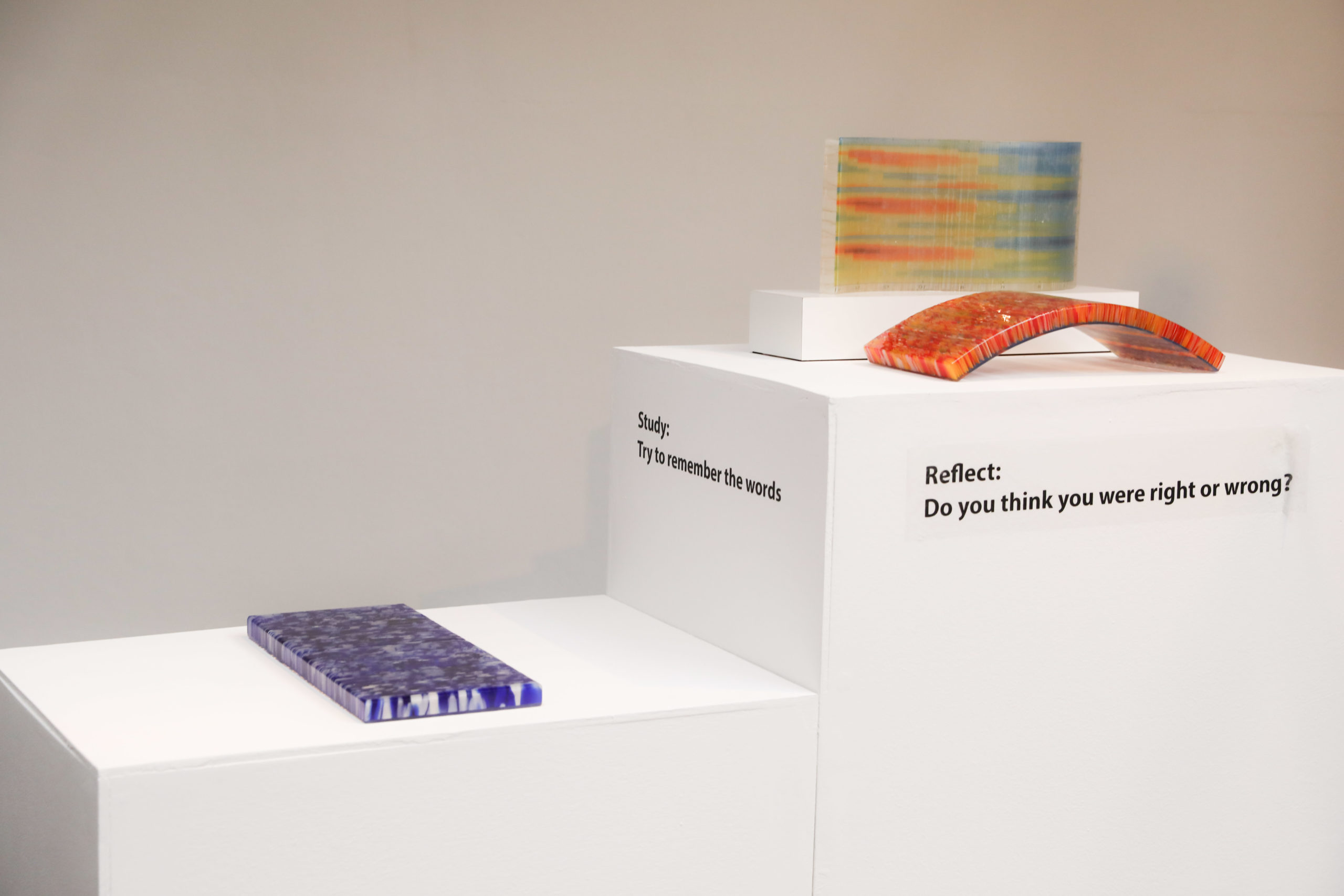
London-based artist Cathryn Shilling took the stimuli and fMRI images from our Journal of Neuroscience metacognition paper and created a splendid art installation called Metacognition in Glass.
“Embedding the experimental materials in glass embodies the notion that the brain's machinery for self-reflection provides us with a distant, sometimes opaque view of ourselves.”
Profiles, long-format interviews, public lectures and expert opinion in the popular media:





Selection of newspapers, magazines, news websites, podcasts and blogs featuring my work:








jorge morales
201 west duke building
campus box 90743
durham, nc 27708